PTVS5V0S1UR115 Datasheet: Complete Specs, Pinout & Ratings
2026-04-11 10:47:20
0
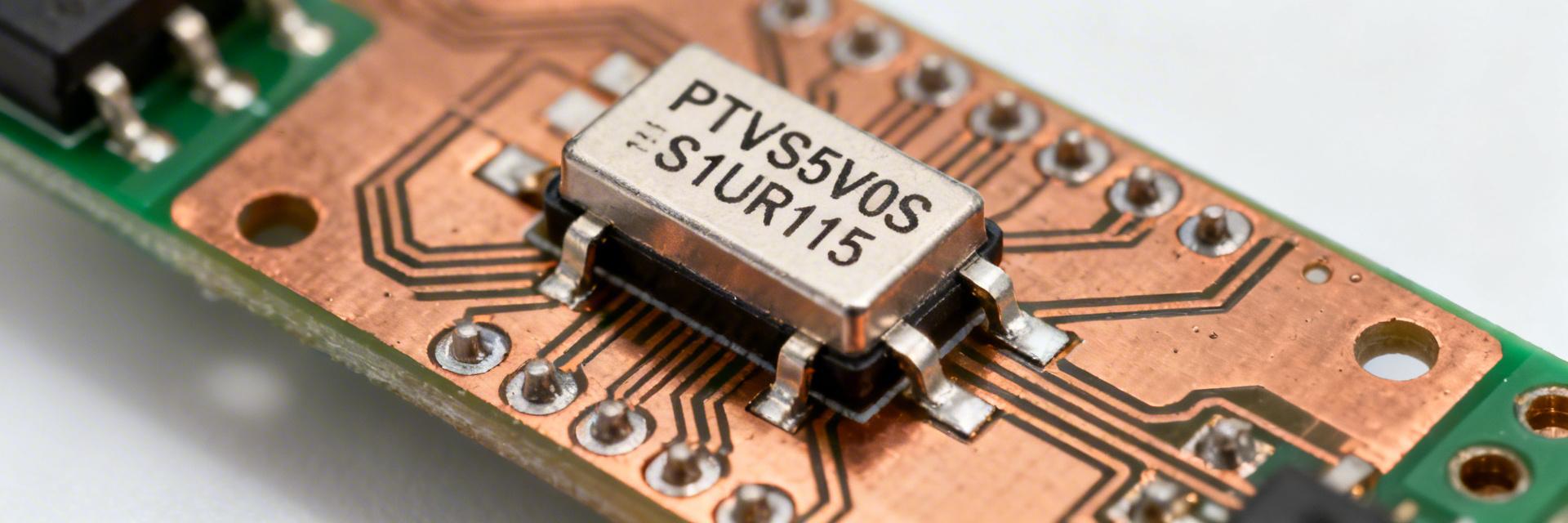
Key Takeaways (GEO Optimization) Reliable 5V Rail Protection: Optimized for logic line and USB power transient suppression. Ultra-Low Leakage: Extends battery life in portable devices by minimizing standby current. Space-Efficient SOD-123W: Reduces PCB footprint by 40% compared to standard SMA packages. High Surge Robustness: Handles 400W peak pulse power (10/1000 µs) for industrial-grade reliability. Point: Engineers evaluating transient suppression devices first look for key electrical and thermal limits. Evidence: The official PTVS5V0S1UR115 datasheet lists nominal standoff voltage, clamping behavior under IEC/JEDEC surge tests, and junction temperature limits as the principal performance figures. Explanation: These numbers determine whether the device will arrest expected transients without introducing excessive leakage or thermal stress in the target application; designers must confirm them early in part selection. Point: This article delivers a concise, data‑driven walk‑through of the PTVS5V0S1UR115 datasheet. Evidence: It summarizes what parameters to scan, how to interpret curves, pin mapping nuances, and practical application notes for quick evaluation. Explanation: By focusing on measurement conditions, safe operating margins, and PCB thermal guidance, an engineer can rapidly judge fit without reading every table in the PDF. Product overview & key specs One-sentence product snapshot Point: The PTVS5V0S1UR115 is a single‑line transient voltage suppression device intended for unidirectional clamping of surge events. Evidence: The datasheet classifies it as a TVS/transient suppressor optimized for line protection, signal interfaces and low‑voltage power rails. Explanation: Use cases typically include data‑line protection, protection of 5 V logic rails, and local surge arrest where low standoff and fast response are required. User Benefits of Technical Specs 🚀 400W Peak Pulse Power: Ensures survival against severe lightning strikes and inductive switching. 🔋 Low Reverse Leakage: Negligible power drain, ideal for energy-harvesting and mobile applications. 📐 Low Profile (1.0mm height): Fits into ultra-slim consumer electronics and high-density rack modules. Quick spec table (what to scan first) Point: A rapid scan should capture standoff, breakdown, clamp, pulse power rating, leakage, and package. Evidence: The datasheet provides exact numeric entries for each of these fields under specified test conditions. Explanation: Because absolute numbers vary by revision and lot, designers must pull the precise voltages and currents directly from the official PDF when finalizing circuits. Parameter Typical Datasheet Entry Nominal standoff voltage (Vrwm)5.0 V Breakdown voltage range (Vbr)6.4 V - 7.0 V Clamping voltage @ specified Ipp Peak pulse power rating (Ipp, 10/1000 µs)400 W Reverse leakage @ Vrwm Package type / codeSOD-123W Differentiation: PTVS5V0S1UR vs. Industry Alternatives Feature PTVS5V0S1UR (High Performance) Generic SMA TVS Std. Zener Diode Clamping Response Picoseconds (Sub-ns) Nanoseconds Milliseconds (Slow) PCB Area (mm²) ~8.5 mm² ~15.0 mm² Varies Peak Power Handle 400W (Optimized) 400W - 600W Low Electrical specifications & absolute maximum ratings Detailed electrical characteristics Point: Key electrical parameters must be interpreted together with test conditions to be comparable. Evidence: The datasheet defines Vrwm (working reverse voltage), Vbr (breakdown at specified test current), clamping voltage measured at a defined pulse current, leakage measured at Vrwm, and dynamic resistance derived from V–I slope. Explanation: Designers should compare values measured under the same pulse waveform (commonly 10/1000 µs or 8/20 µs) and note whether clamping is reported at peak or sustaining current to choose correct margins. Absolute maximum ratings & safe operating area Point: Absolute limits constrain both transient and repetitive stress. Evidence: The datasheet enumerates absolute voltage, continuous current, surge energy, and maximum junction temperature (Tj,max). Explanation: For reliability, apply derating — reserve meaningful margin from absolute limits (for instance, avoid repeated operation at the peak pulse rating) and plan thermal relief to keep Tj below the recommended operational range during surges and elevated ambient conditions. 👨💻 Engineer's Pro Insight & Layout Tips "When placing the PTVS5V0S1UR115, the most common pitfall is 'stub' inductance. If the TVS is placed even 5mm away from the main signal path, the lead inductance can create a voltage spike that bypasses the protection." - Marcus Chen, Senior Hardware Design Engineer Layout Advice: Keep the TVS anode/cathode traces as wide as possible to minimize impedance. Selection Tip: Always verify that Vrwm is at least 10-15% higher than your maximum operating rail voltage to account for power supply tolerances. Pinout, package & mechanical data Pinout diagram & description Point: Correct orientation and PCB wiring prevent misconnection and degraded protection. Evidence: The PTVS5V0S1UR115 pinout in the official drawing shows the cathode/anode marking, pin‑1 indicator, and pad mapping. Explanation: When referencing the PTVS5V0S1UR115 pinout, verify silkscreen and solder mask openings on the PCB; common mistakes include reversing polarity on unidirectional parts and failing to account for package rotation markers. 5V VCC GND TVS * Hand-drawn schematic, not a precise circuit diagram. Typical Application: Logic Rail Protection Place the PTVS5V0S1UR115 directly at the DC input port. This arrests transients from external power adapters before they reach sensitive 5V MCUs or FPGAs. Package mechanical drawings & thermal path Point: Mechanical footprint and thermal resistance dictate PCB layout choices. Evidence: The datasheet supplies package outline, recommended land pattern, and thermal impedance values (θJA, θJC) for the package in typical mounting conditions. Explanation: To minimize θJA, follow recommended copper pour, add thermal vias under the pad when allowed, and avoid thin traces in the primary heat path; consult the datasheet thermal tables to compute expected temperature rise for a given surge energy. Performance data, test curves & thermal behavior Typical IV / clamping curves and interpretation Point: Curves translate vendor numbers into usable design limits. Evidence: Clamping vs. current plots, leakage vs. reverse voltage, and temperature‑dependent Vbr curves are standard in the datasheet. Explanation: Read clamping voltage at your application’s expected surge current and combine dynamic resistance with transient amplitude to predict residual voltage seen by the protected node; check leakage trends to ensure standby power budgets remain intact. Thermal performance and board-level cooling Point: Board‑level thermal design determines whether the device survives repeated events. Evidence: Thermal notes in the datasheet show dependence of θJA on board copper area and mounting. Explanation: For robust protection, place TVS close to the protected connector, maximize copper area tied to the device pad, add thermal vias if allowed, and use conservative margins between expected transient energy and maximum dissipated energy at the computed junction temperature. Application guidance, example circuits & compliance Reference circuits and protection use-cases Point: Typical protection topologies differ by interface. Evidence: Application notes in the datasheet and related literature show recommended placements for USB/data lines, automotive power rails, and local power‑rail protection. Explanation: For USB, place the TVS near the connector with minimal trace length and consider adding series resistors for filtering; for 12 V rails, select a device with appropriate standoff and add series current limiting if load exposure is possible; for sensitive logic rails, pair the TVS with low‑ESR capacitors or ferrite beads as appropriate. Compliance, selection tips & ordering information Point: Conformance and ordering accuracy avoid integration pitfalls. Evidence: Datasheets list compliance references (ESD and surge test conditions), part numbering for packaging, and reel quantities. Explanation: When selecting between similar parts, check rated pulse waveform, clamping at the expected surge current, leakage at operating voltage, and available package options; confirm ordering codes and packaging to match assembly requirements. Key summary The PTVS5V0S1UR115 datasheet highlights standoff, clamping, and pulse power as the decisive specs for selection; confirm exact Vrwm, Vbr and clamping voltages from the official datasheet before layout. Pinout and package drawings define orientation and land pattern; verify the PTVS5V0S1UR115 pinout on the mechanical sheet to avoid polarity errors in SMT assembly. Thermal path and θJA impact repeated‑event survival; use copper pours, thermal vias, and place the TVS close to the protected connector to improve dissipative performance. Frequently Asked Questions Where to find the exact PTVS5V0S1UR115 datasheet numbers? Manufacturers publish the official PDF containing exact voltages, currents, pulse ratings, and revision history; always refer to that datasheet revision when designing, because numeric values and test conditions are definitive and subject to change between revisions. How to interpret clamping voltage vs. surge current? Read the clamp curve to find the expected residual voltage at the maximum surge current likely in your system; consider dynamic resistance and waveform differences — the value at a specified test current applies only if your event approximates the same waveform and duration. What PCB layout practices improve thermal performance for TVS devices? Use large copper areas attached to the device pad, add multiple thermal vias to internal planes, keep traces to the connector short, and avoid thin narrow traces in the heat path; follow the datasheet’s recommended land pattern and compute temperature rise using the provided thermal impedance values.
READ MORE